


FAQ
Do you still have questions or need more information? On this page you will find the most common questions on topics such as sustainability, planning and maintenance. Please contact us for further information.


Goals and values
What does the company stand for in the long term?
In the long term, RAU® stands for thinking noise protection and landscape together: we develop and build noise barriers that not only effectively reduce noise, but also improve the environment and cityscape at the same time. Essentially, the aim is to increase quality of life by reducing traffic noise, improving air quality and creating new green spaces.
Our claim is, to offer 100% sustainable, climate-friendly and highly absorbent noise protection systems that are at the cutting edge of technology and blend harmoniously into their surroundings – whether on roads, railroad lines or industrial plants. The products are designed to function for decades, can be modularly adapted to any situation and offer clear ecological added value.
In the long term, RAU® stands for:
- Green noise protection as standard instead of gray concrete walls
- Proven climate-friendly solutions that minimize CO₂ emissions and bind them again during operation, e.g. with RAU® Klimawand, which consists primarily of excavated material and binds more CO₂ than is produced during production.
- Complete service from a single source – from advice, planning and expert reports to installation and maintenance.
In short:
RAU® aims to design modern noise protection in such a way that it protects people, makes cities greener and conserves resources.
What role does ecological responsibility play?
Our work is based on a number of clear guiding values that run through all our products and services:
Sustainability & ecological responsibility
Ecological responsibility is not an add-on, but the core of our business model.
- 100% ecological noise protection systems: RAU® systems are designed to be sustainable, climate-friendly and resource-saving – right through to dismantling.
- Green noise barriers: Plants and substrates are an integral part of our walls, not just “decoration”. Green systems create habitats for animals, bind fine dust and improve the microclimate.
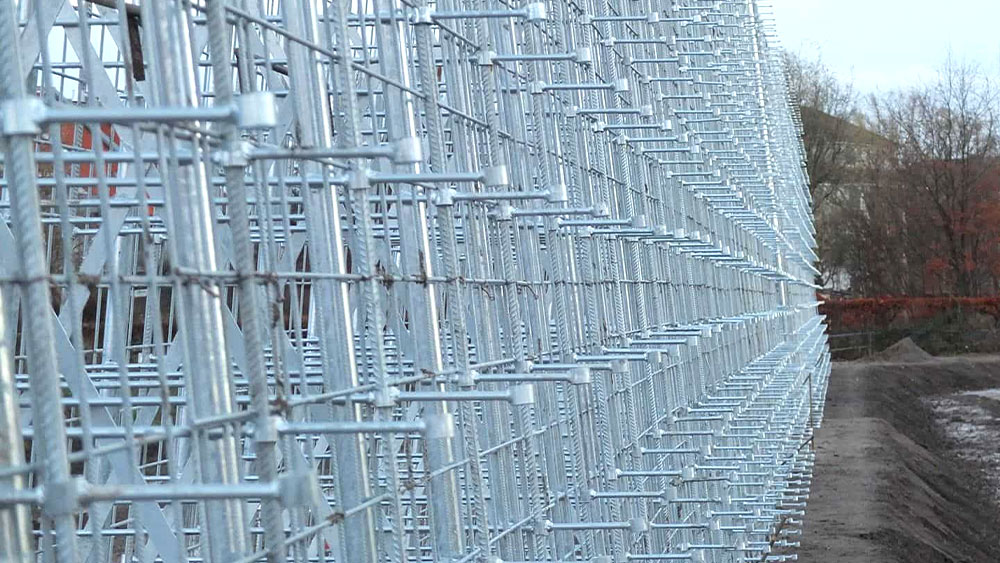
- Climate-neutral concepts: With solutions such as RAU® Klimawand, we mainly use excavated material from the construction pit on site, use a minimal amount of steel and thus achieve low-CO₂ constructions. The greening helps to bind emissions again in just a few years; the Klimawand has a KlimAktiv certification.
Quality of life & responsibility for people
For us, noise protection is always also a health and quality of life issue:
We develop systems that effectively reduce noise levels and thus protect residents, employees and sensitive natural areas. The aim is to achieve a noticeable improvement in everyday life – especially in heavily polluted traffic and urban areas.
Technical excellence & innovation
- We combine engineering skills, landscape planning and product innovation – for example in soundproof walls with photovoltaics or hemp fiber sound absorbers (Canwool).
- All systems are technically tested, certified and optimized for high sound insulation values, durability and low maintenance.
Reliability, experience & partnership
- Over 30 years of experience and a team of >50 employees and partners who specialize in noise protection ensure planning and implementation reliability.
- We see projects as a partnership: from the initial consultation to expert reports and tender texts to installation and service.
Sustainability
What materials can our noise barriers be made of?
Hemp fiber, wood, glass, aluminum, concrete, excavated material or equipped with photovoltaics. Our noise barriers can also be planted with vegetation.
Why should I buy a noise barrier from RAU®?
RAU® stands for sustainability and a green thumb, from the choice of materials and construction to dismantling and disposal. Without exception, our more than 30 employees reflect our expertise of more than 30 years.
What sets RAU® apart from the competition?
In most cases, the greenery is only added to the noise barrier at a later stage. With RAU® noise barriers, however, the greenery is already part of the noise barrier. In addition, RAU® noise barriers are characterized by their resource-saving and CO₂-saving structure. More information on green noise protection.
Why are noise barriers from RAU® particularly sustainable?
Why should a noise barrier be greened at all and how is this done?
By planting a noise barrier, the emissions generated during the provision of raw materials, production, transportation and construction are absorbed after just a few years. As a result, the RAU® noise barrier has a climate-neutral balance sheet. This has already been certified for the RAU® climate wall.
Which plants can be used for greening?
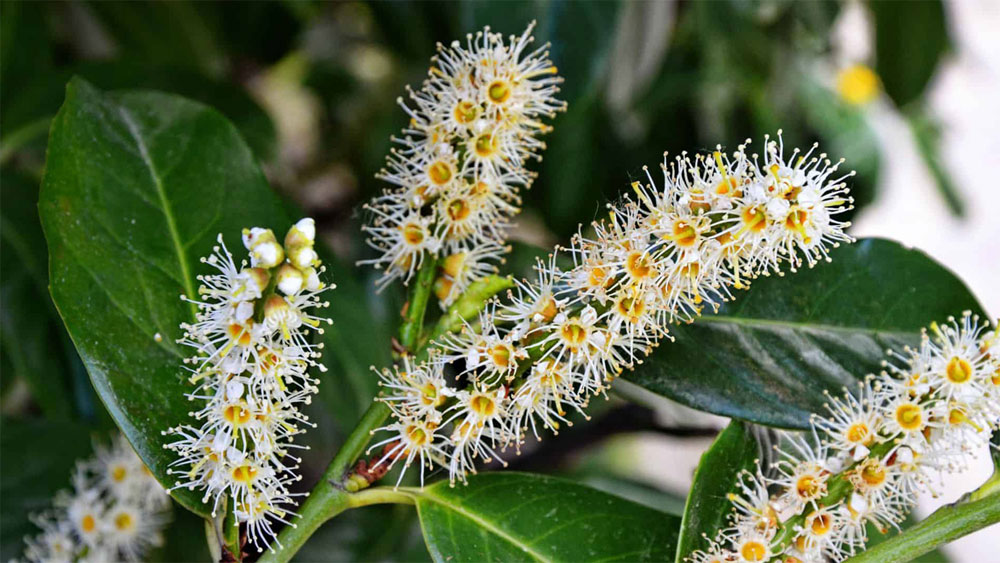
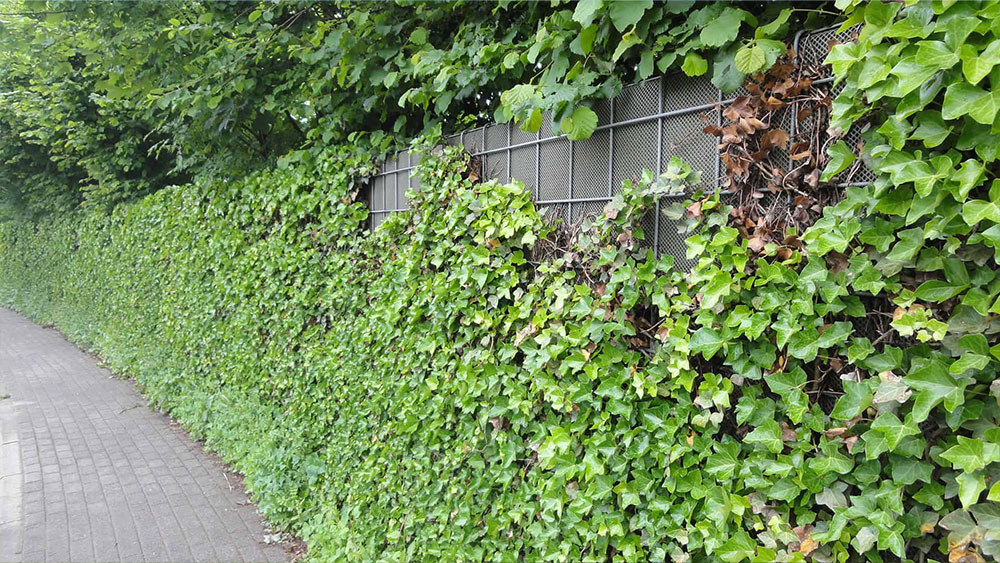
The climbing plant ivy is particularly popular for planting a noise barrier as it grows densely and is easy to care for. In addition, the noise barrier can also be planted with any other plants such as winter jasmine, cherry laurel or hawthorn. You can find out more about greening noise barriers here.
Is it possible to operate photovoltaics on a noise barrier?
As a pioneer in innovation, RAU® has realized the first solar noise protection solution in Germany that generates electricity ecologically. The RAU® climate wall with photovoltaic system.
Planning
Who puts up the noise barrier?
The noise barrier can either be supplied, assembled and maintained by us in a compact design or supplied exclusively as a kit. The installation is then carried out by a local company or by the customer. RAU also offers planning services.
How high should a noise barrier be?
Our noise barriers are up to 12 m high. The individually required height is precisely calculated by engineers. Roughly speaking, the closer the noise source, the higher the noise protection should be.
How long can a noise barrier be?
There is no predefined maximum length for a RAU® noise barrier. The length can vary depending on the site conditions. It is also possible to flexibly combine different noise barrier elements.
How wide is a noise barrier?
The width of a noise barrier varies depending on the product type. The minimum construction width of the space-saving RAU® Klimawand S is just 13 cm, while the minimum construction width of the RAU® Klimawand is 1.00 meters.
What should be considered when planning a noise barrier?
There are many points to consider, including space requirements, wall layout and wall height. You also need implementation plans, tender specifications and noise protection reports. RAU® takes care of all the planning tasks. We support you throughout the entire process with our expertise and thus ensure smooth construction.
Does a noise barrier have to be put out to tender?
Tenders are usually mandatory.
What information should you have for an inquiry?
As a minimum, you should be able to present a subsoil report and noise protection report.
Can private individuals also order a noise barrier from RAU®?
Requests from private individuals are handled by local gardeners and landscapers.
Is there a minimum size for a noise barrier?
There is no minimum size for an order with RAU®.
How much does a noise barrier cost?
The cost of your RAU® wall depends on a number of different factors. Our team will be happy to advise you on a final price.
Can a noise barrier also be erected along railroad tracks?
Our product range includes a variety of noise barrier solutions that also optimally meet the requirements for the construction of railroad lines. For example, the RAU® Klimawand S or our new NoiseGuard noise barrier system combine minimal construction widths with high sound absorption values.
Can curves also be mapped with a noise barrier?
We are happy to accept orders for special components of all kinds. Each wall is individually planned and adapted to the requirements and needs of the project. This also makes it possible to create curves or similar designs that deviate from the standard.
Soundproof enclosures
Which RAU® systems are suitable for enclosures?
How do we solve ventilation and heat dissipation in an enclosure?
Depending on the usage concept and requirements, we integrate specific technical solutions for air flow, smoke extraction and heat dissipation. These are planned individually to ensure safe and efficient operation – for example, when enclosing energy storage units or heat pumps.
What acoustic performance do our enclosures achieve?
Our systems meet all the requirements of the ZTV-LSW and the Federal Immission Control Act (BlmSchV). The RAU® Klimawand significantly exceeds these requirements: it achieves more than twice the sound insulation and sound absorption of conventional systems.
How does a typical project work?
What guarantee applies to RAU® enclosures?
We provide a 4 to 5-year warranty on structures and services – depending on the type of contract. Our systems are durable, low-maintenance and statically verifiable, ensuring maximum safety in the long term.
Why are RAU® enclosures particularly suitable for parking garages?
Maintenance
How high are the maintenance costs of a noise barrier?
The green sound insulation is made of UV-safe materials and is particularly corrosion-resistant, saving you high maintenance costs.
How long is the service life of a noise barrier?
The service life of a noise barrier depends on various factors such as the design of the noise barrier itself, but also on site conditions. With the RAU® climate wall, we assume a service life of 60 years or more.