


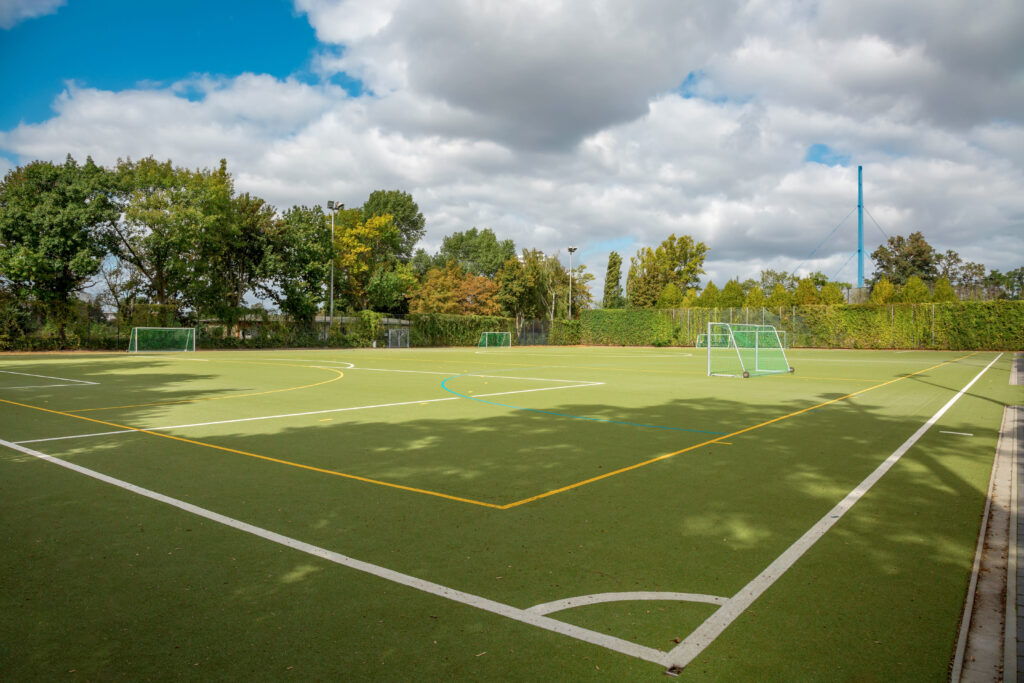
It is no secret that noise often causes disputes between neighbors. Conflicts are particularly common in connection with sports and leisure facilities. As most people do their sporting activities in their free time, it can be particularly loud in the evenings and at weekends. So while the users of the facilities only want to pursue their hobbies, the residents are looking for peace and quiet and relaxation.
Here you can find out exactly what is meant by “leisure noise”, what limits and laws there are and how you can effectively prevent noise pollution at sports grounds and leisure facilities in your project.
What is sports and leisure noise? And why is it a problem?
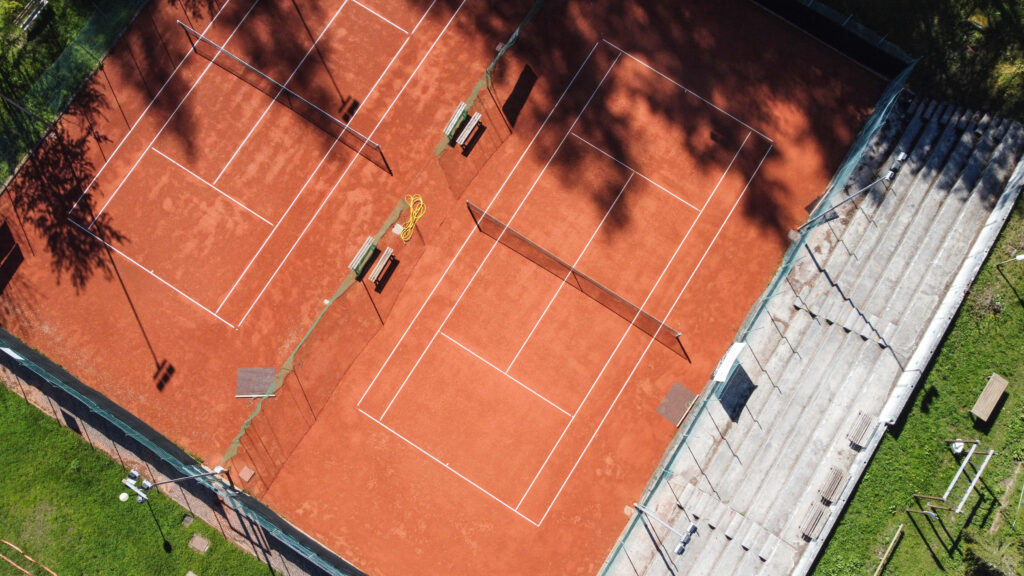
As the name suggests, sports noise refers to all noise caused by the operation of sports facilities, such as noise pollution from a soccer pitch or similar. In contrast, noise emanating from leisure facilities such as leisure parks, adventure pools or events such as outdoor concerts is referred to as leisure noise. This arises when people engage in leisure activities that are not necessarily related to sport.
Establishments such as discotheques and pubs, even if they are adjacent to the sports field, for example, are generally operated commercially and therefore fall under the Hospitality Act. This is therefore not leisure or sports noise, but commercial noise. Another exception are children’s playgrounds and daycare centers. Despite extensive play, fun and sport for the little ones, these are not legally considered leisure facilities. The noise generated here is generally considered tolerable, as there is no harmful noise pollution caused by children playing.
In general, none of these sports or leisure activities are a problem, of course. The increasing conflicts arise less from the presence of the sports facilities themselves, but rather from the spread of residential areas in outdoor areas. As soon as the noise level here exceeds the specified limits in the long term, the well-being or even the health of local residents can be affected.
Why noise protection at sports grounds & co. is so important
Noise protection is also very important for leisure and sports noise. It helps to protect the health and well-being of residents. This is because uncontrolled noise can lead to sleep disorders, stress, hearing problems and other health impairments. Good noise protection at sports facilities ensures that the noise level is reduced and therefore also minimizes the risk of health problems. In addition, appropriate noise protection measures can help to avoid or minimize conflicts between sports facility operators and the neighbourhood. The acceptance of a sports field or leisure facility in the local area is significantly higher if people are not restricted by the resulting background noise.
If the regulations of the Immission Control Act (BImSchV) regarding noise at sports grounds are observed and complied with, ideally right from the planning stage, such problems can be avoided.
Sports facility noise protection ordinance: laws and limit values
In Germany, noise protection is regulated by the Sports Facilities Noise Protection Ordinance (18. BImSchV), which contains immission guide values as well as the determination and assessment procedure. The Sports Facilities Noise Protection Ordinance takes into account the special features of sports operations, such as different assessment times on working days as well as Sundays and public holidays, additional immission guide values for quiet periods, regulations for the permissibility of fewer, particularly loud event days and surcharges for sound and information content. The latter specify the extent to which a noise attracts attention and therefore encourages unwanted listening. The daily quiet period from 1 p.m. to 3 p.m. is only relevant in the case of noise at a sports field or from a leisure facility if the period of use on Sundays and public holidays is more than four hours. It should also be noted that sports and leisure facilities do not generally require a permit, but are nevertheless subject to the basic obligation of the general Federal Immission Control Act (BImSchG). This stipulates that harmful effects on the environment should be reduced or, in the best case, avoided altogether.
In 2017, an amendment to the Sports Facilities Noise Protection Ordinance was passed in favor of sports fans, as sport is considered important to society. Courts make individual judgments on sports ground noise pollution, but measurement is mandatory in all cases. It provides information on whether the noise is reasonable and therefore complies with the law or not. The Sports Facilities Noise Protection Ordinance was last updated on January 1, 2022.
Area type | Limit value in decibels (dB)
Day
Night
Industrial area
70 dB
70 dB
Industrial estate
65 dB
50 dB
Urban areas
63 dB
45 dB
Core areas, village and mixed areas
60 dB
45 dB
General residential areas and small housing estates
55 dB
40 dB
Purely residential areas
50 dB
35 dB
Health resorts, hospitals and nursing homes
45 dB
35 dB
Noise pollution from sports fields & more: noise barriers provide a remedy
When it comes to sports noise and the noise level around leisure facilities, there are various noise protection methods that can be used. For example, tents or technical measures such as distributed individual loudspeakers with sound level limiters for individual events, such as sports festivals or club celebrations, provide temporary noise protection. In addition, it is important to consider precautions such as the use of less loud instruments or the design of parking spaces during the planning stage, as this is another way to minimize noise pollution from a sports ground in a residential area. Limiting or shortening the useful life of the facilities is also conceivable.
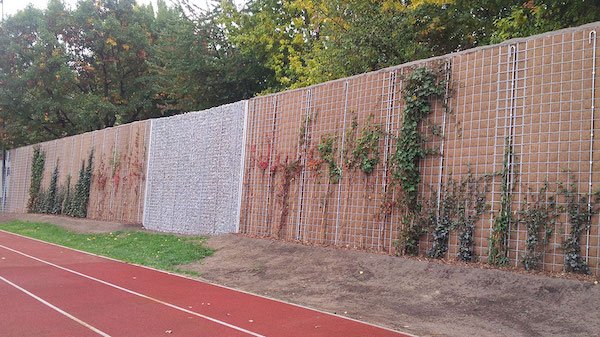
Another option is the use of earth walls or noise barriers. In addition to temporary rapid construction systems such as RAU® Climatewall S, the installation of a noise barrier is extremely useful for large leisure facilities with many regular visitors. With green noise protection such as RAU® Climatewall, a sound insulation value of 68 dB and sound absorption of 20 dB can be achieved without visually detracting from the neighborhood. There is even a species protection report on top!
How RAU® helps you to comply with noise protection at sports facilities
RAU® noise barriers are characterized by their ecological, sustainable and low-maintenance properties. As a result, they contribute to the visual enhancement of residential areas and provide a natural habitat for local wildlife. On the other hand, the noise barriers also make a significant contribution to improving the quality of life of local residents. Whether on roads, at an airport or even due to sports noise: green noise protection from RAU® is individually adapted to the environment and the special requirements there and thus offers optimum shielding. We only use durable materials for our products and select them carefully to ensure the highest quality for your project. Together against noise – with RAU® at your side.